AI 2027 predictions have circulated widely enough that job seekers keep asking a version of the same question: is this actually going to happen, and if it does, what does it mean for my career specifically? The short answer is that AI 2027 is not a government forecast or a guaranteed outcome. It is a detailed scenario written by a small group of researchers, and understanding that distinction matters before you make any real decisions based on it.
AI 2027 was published in April 2025 by five authors, including Daniel Kokotajlo, a former OpenAI researcher, along with Eli Lifland, Thomas Larsen, Romeo Dean, and writer Scott Alexander. The scenario was built through roughly 25 tabletop exercises and feedback from more than 100 people working in AI governance and technical research. It reads like a narrative timeline rather than a traditional research report, walking month by month through how the authors believe advanced AI development could unfold through 2027.
That format is exactly why it has spread so widely outside AI policy circles. A concrete, dated scenario is far easier to share and react to than an abstract discussion of AI risk, and the specific claims about job disruption are what tend to reach job seekers rather than the underlying policy argument the authors are actually making.
This guide breaks down what AI 2027 predictions actually say about the job market specifically, how seriously to take a document like this, and what practical steps make sense regardless of whether this particular timeline turns out to be accurate.
Treating a scenario document as a confirmed forecast, or dismissing it entirely because it sounds dramatic, are both mistakes that skip past the more useful question of what a career-relevant response actually looks like.
The Short Answer
AI 2027 predictions describe an accelerating timeline where AI coding tools disrupt junior software engineering roles starting in early 2026, broader white-collar job displacement begins by mid-2027, and AI systems match or exceed human performance across most cognitive tasks by September 2027 in the authors’ scenario. This is a speculative forecast built by independent researchers, not an official economic projection, and the authors themselves present it as one possible path rather than a certainty.
The most useful response is not panic or dismissal, but paying attention to which parts of the scenario already show early signs in real labor market data, since that overlap is a better signal than the raw prediction alone.
What AI 2027 Predictions Actually Say About Jobs
The scenario lays out a month-by-month timeline rather than a single blanket prediction. In mid-2025, the authors describe AI agents emerging but struggling with widespread practical adoption, while specialized coding tools begin changing how certain professions work. By early 2026, the scenario describes AI automating a significant share of coding tasks, with hiring for junior software engineering roles entering what the authors call turmoil.
| Scenario Timeframe | Milestone Described | Jobs Most Affected |
|---|---|---|
| Mid-2025 | AI agents emerge, limited practical adoption | Early, narrow effects in technical roles |
| Early 2026 | AI automates significant coding tasks | Junior software engineers |
| July 2027 | Advanced coding AI released publicly | Programmer hiring broadly slows |
| August 2027 | Public awareness of rapid AI progress grows | Broader white-collar disruption begins |
The table above reflects the general escalation pattern in the scenario, moving from narrow disruption in specific technical roles toward broader white-collar impact. By July 2027, the scenario describes a publicly released coding-focused AI system accelerating this shift further, with technology company hiring for programmers nearly stopping in the narrative. By August 2027, the scenario describes the broader public becoming aware that AI capability is advancing unusually fast, alongside the beginning of more widespread job displacement.
How Seriously Should You Take This Scenario
This is the question that matters most for anyone making actual career decisions. AI 2027 is a genuinely well-researched document, built by people with real experience in AI policy and technical research, and it should not be dismissed as random speculation. At the same time, it is explicitly a scenario exercise, not a peer-reviewed economic forecast, and detailed, dated predictions about complex systems have a long track record of being wrong on specifics even when they correctly identify a general direction.
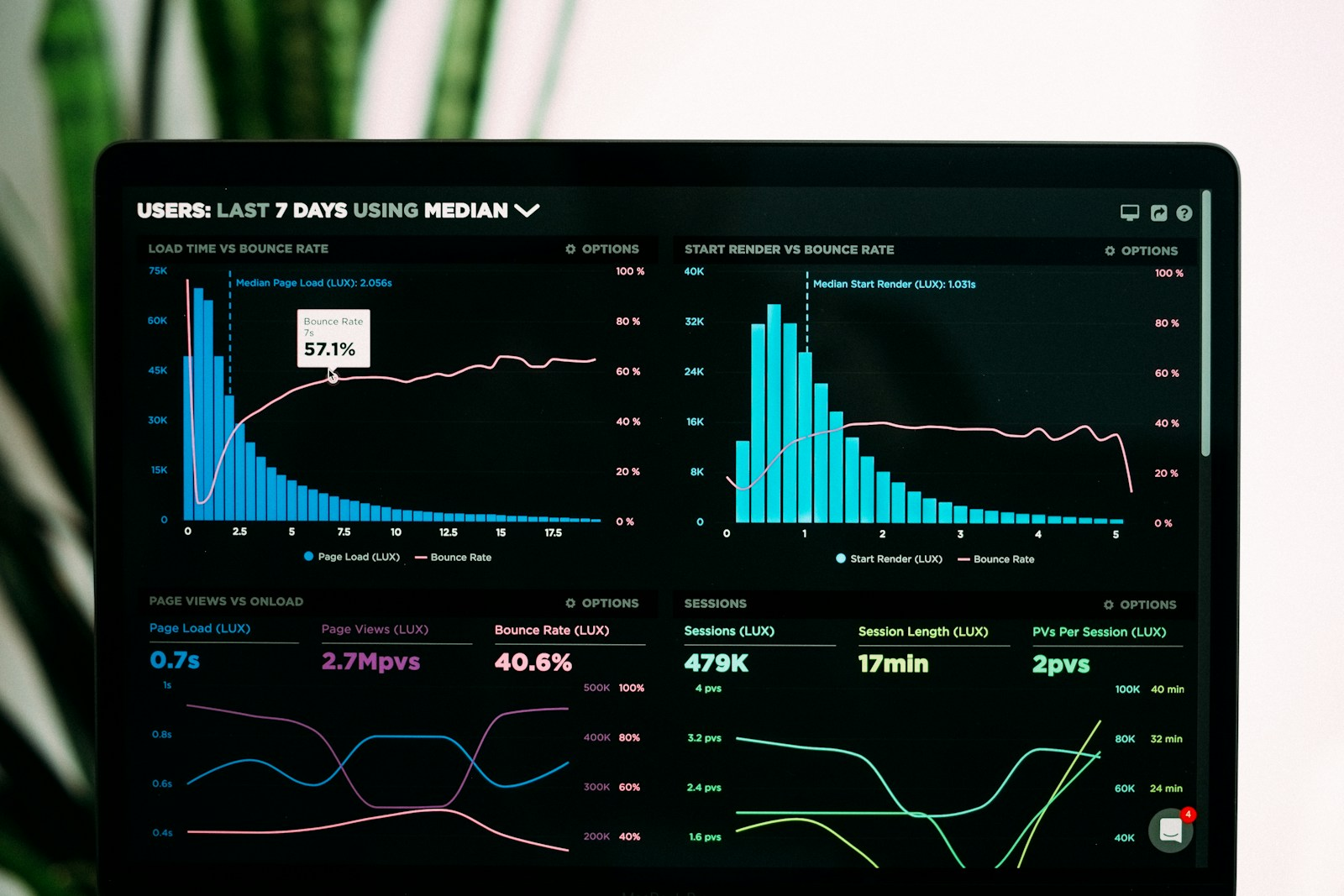
A more useful approach than accepting or rejecting the whole timeline is checking which specific claims already show up in real, measured labor market data. The Stanford Digital Economy Lab’s Canaries Dashboard, for example, tracks real payroll data across more than 700 occupations.
That dashboard has found that early-career employment growth is measurably slower in occupations with high AI exposure, including software development, compared to lower-exposure occupations. That is a real, current data point rather than a speculative one, and it lines up directionally with part of what AI 2027 predictions describe, even though the dashboard makes no claim about a September 2027 milestone specifically.
This kind of cross-referencing is worth doing with any dramatic forecast, not just this one. A scenario that gets the general direction right but the exact timing wrong is still useful information, while one that shows no overlap at all with real data deserves considerably more skepticism before it shapes an actual decision.
This distinction, between a scenario’s narrative predictions and independently measured current data, is the most practical lens for deciding how much weight to put on any single claim in the document.
What This Means If You Are Job Searching Right Now
If you are early in a software engineering career, the most directly relevant part of AI 2027 predictions is the claim about junior-level disruption specifically, not senior or highly specialized technical roles. This partially overlaps with what real payroll data already shows, which makes it worth taking seriously as a planning input even if the exact timeline in the scenario does not play out precisely as written.
Building demonstrated skill in working alongside AI coding tools, rather than only writing code independently, is a reasonable hedge regardless of which specific timeline turns out to be accurate. Employers increasingly value candidates who can supervise, review, and improve AI-generated output, a skill set the scenario itself describes becoming valuable as “AI team manager” and “AI integration consultant” type roles.
For white-collar workers outside software specifically, the scenario’s broader claims about disruption are less immediately verifiable in current data, which argues for treating that part of the prediction with more caution than the software-specific claims. Building general adaptability, staying current on how AI tools are actually being adopted in your specific field, and investing in continuing education are all reasonable responses, alongside avoiding overreaction to a single speculative document.
Recruiters and hiring managers report a similar pattern in practice: candidates who can speak specifically about how they have used AI tools in their actual work tend to stand out more than candidates who either avoid the topic entirely or claim vague, general familiarity. Whatever the exact accuracy of AI 2027 predictions turns out to be, that specific, demonstrated fluency is a reasonable skill to build regardless.
Common Mistakes People Make When Reacting to This Kind of Forecast
- Treating the scenario as a guaranteed timeline. Specific dated predictions about complex systems are frequently wrong on details even when a general direction turns out to be correct.
- Dismissing it entirely because it sounds dramatic. The authors have real relevant experience, and some directional claims already show partial overlap with measured labor market data.
- Making an irreversible career decision based on one document. A single speculative scenario is a weak basis for a full career pivot compared to a pattern confirmed across multiple independent sources.
- Ignoring the difference between scenario claims and real data. Confusing a narrative prediction with an empirical finding leads to either overconfidence or unwarranted dismissal.
Any one of these mistakes is understandable given how unusual and specific this kind of document is, but together they explain why reactions to AI 2027 predictions tend to cluster at two unhelpful extremes: total dismissal or total panic, rather than a measured, evidence-based response.
Frequently Asked Questions About AI 2027 Predictions
Is AI 2027 an official government or industry forecast?
No. It was written independently by researchers with backgrounds in AI safety and policy, informed by tabletop exercises and expert feedback, but it carries no official government or industry endorsement and should be read as one scenario among several possible futures.
Do AI 2027 predictions apply to all jobs equally?
No. The scenario specifically emphasizes software engineering and coding-adjacent roles in its earlier timeline, with broader white-collar disruption described as happening later and less specifically. Jobs with lower measured AI exposure show different patterns in current real-world labor data.
Has anything in AI 2027 predictions already happened?
Some directional claims, particularly around AI tools affecting entry-level coding roles, show partial overlap with real data from sources like the Stanford Digital Economy Lab’s Canaries Dashboard, though the dashboard’s findings are more modest and gradual than the scenario’s dramatic framing.
Should I change my career plans because of this document?
A complete career pivot based on one speculative scenario is not a well-supported decision on its own. Using it as one input alongside real labor market data, and building genuinely useful adjacent skills like AI tool fluency, is a more balanced response than either ignoring it or overreacting to it.
What is the difference between AI 2027 and similar projects like AI 2040?
AI 2040 was published later by an overlapping group of researchers and takes a longer view, proposing a slower, more deliberately governed path to advanced AI by 2040 rather than the faster, more dramatic 2027 timeline. It is worth reading as a companion perspective from the same research community.
The Bottom Line
AI 2027 predictions are a detailed, well-researched scenario, not a confirmed outcome, and treating it as either gospel or nonsense misses the more useful middle ground. The parts of the scenario that already show up in real, measured labor market data, particularly around entry-level software roles, deserve real attention regardless of whether the exact 2027 timeline proves accurate.
Building adjacent skills, watching real data sources rather than only the scenario itself, and avoiding both panic and dismissal are the practical takeaways that hold up whether this specific forecast turns out to be right, wrong, or somewhere in between.
Anonymous and approximate. We store one number for this article and nothing about you.
Email digest
We also run a layoff tracker, built from company filings and official notices. A plain email summary of what changed on these trackers: headline numbers, the largest new entries, and links to the sources. You confirm your address by clicking a link we email you, and one click unsubscribes. Already subscribed? Use this form to change what you get. The boxes replace what you had.
Our mail provider records whether you open an email and which links you follow, including the confirmation email, which is measured before you have agreed to anything. Unsubscribing stops the sending and the recording together.
You can read every past edition first. Each one is kept permanently, exactly as it was sent.
Privacy note: what we store and how to erase it
What we store: your email address, the choices above, and timestamps (signed up, confirmed, last sent). Nothing else about you.
What our mail provider records: whether you opened an email and which links you followed, tied to your address. That is Brevo, the service that delivers these emails, and it works by adding a small invisible image and by routing links through its own address. We read it to see which sections people use. Unsubscribing stops the sending and the measuring at the same time, and erasing your row removes it from our side.
The confirmation email is measured too: the same invisible image is in the one message that asks your permission. If you open it, Brevo records that against your address before you have agreed to anything, and it records it even if you then never confirm. We would exempt that message if we could. Brevo offers no way to switch its measuring off for a single email, and the one setting that exists covers every email we send or none of them. If you would rather not be measured at all, do not open it. Nothing else is ever sent to an unconfirmed address, and the signup is deleted from our side after 30 days.
About the links: links in the digest pass through a counter on this site that adds 1 to a total for that link and sends you straight on. It records no identifier, no IP address and no browser details, so it counts how many times a link was followed and can never say who followed it.
What it is used for: sending you exactly the emails you ticked, nothing else. The address is never shared, sold, or used for any other purpose.
How to erase it: click the unsubscribe link in any email. That stops all sending immediately, and unsubscribed addresses, along with signups that were never confirmed, are hard-deleted automatically after 30 days. You can also ask via the contact page.