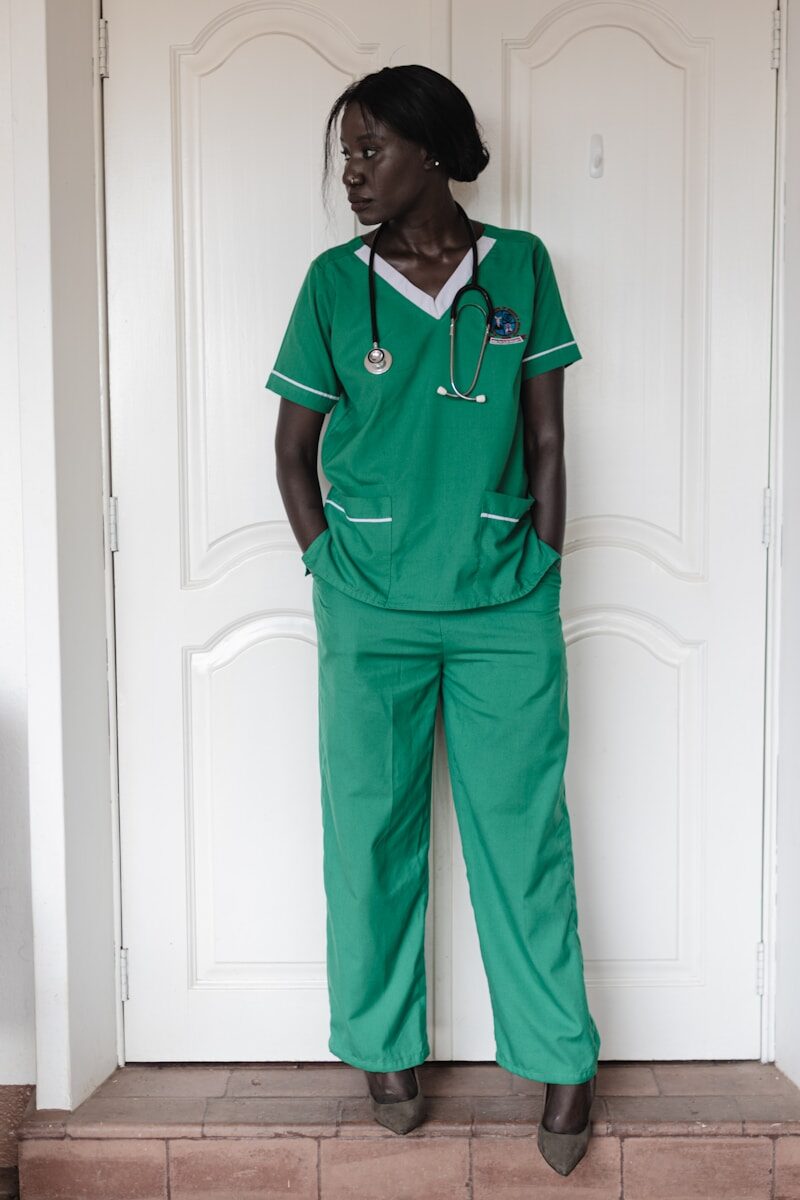
If you are thinking about how to become a nurse in 2026, you are looking at one of the few career changes where the math actually works in your favor. Registered nursing pays a median of $93,600 a year, the U.S. Bureau of Labor Statistics projects tens of thousands of open positions every year through 2034, and multiple pathways exist for people with zero healthcare background to get licensed in under two years. But “the math works” does not mean the transition is easy, it means the effort is worth it if you go in with a real plan.
The Short Answer
To become a nurse without a nursing background, you pick an accredited pathway (an associate degree, a traditional bachelor degree, or an accelerated program if you already hold a degree in something else), complete the clinical coursework, pass the NCLEX-RN licensing exam, and get licensed in your state. Accelerated bachelor programs built for career-changers typically run 12 to 18 months. The bottleneck is not a lack of jobs, it is finishing the program and passing the exam.
The Numbers Behind the Nursing Career Path
The U.S. Bureau of Labor Statistics reports a median annual wage of $93,600 for registered nurses as of 2024, with employment projected to grow 5% from 2024 to 2034, faster than the average for all occupations, adding roughly 189,100 openings a year when replacement needs are included, across a workforce of about 3.4 million RNs nationwide.
The bigger driver, though, is a supply gap. A December 2025 workforce projection from HRSA’s National Center for Health Workforce Analysis estimates a national nursing shortfall of 8% by 2028, narrowing to 6% by 2033 and 3% (about 108,960 full-time-equivalent nurses) by 2038, but that shortage is not evenly spread. Nonmetro areas are projected to face an 11% shortage by 2038 versus 2% in metro areas, and states like California (22%), North Carolina (20%), and Georgia (20%) are projected to have some of the steepest gaps in the country. If you are willing to become a nurse somewhere other than a major metro hospital, your odds of landing a job, and possibly a sign-on bonus, go up substantially.
Encouragingly, the licensing exam itself is not the wall people assume it is. The National Council of State Boards of Nursing reported a 91.2% first-time pass rate for U.S.-educated NCLEX-RN candidates in 2024. The real filter is finishing an accredited program, not passing the test at the end of it.

The 4 Essential Steps to Actually Make the Transition
Here is what it actually takes to become a nurse if you are starting from a different career.
- Choose the right pathway for your situation. If you already hold a bachelor degree in another field, an accelerated BSN program, built specifically for career-changers, is usually the fastest route, running 12 to 18 months including prerequisites according to the American Association of Colleges of Nursing 2025 program data. If you do not have a prior degree, an associate degree in nursing (ADN) can get you licensed faster and cheaper, though a BSN opens more doors long-term, especially in magnet hospitals and leadership tracks.
- Front-load your prerequisites before you apply. Accelerated and traditional programs alike assume you have already completed anatomy, physiology, microbiology, and statistics. Knocking these out at a community college before you apply saves a full semester and keeps your accelerated timeline realistic.
- Treat the NCLEX-RN as a study project, not a formality. A 91.2% first-time pass rate sounds reassuring, but it reflects nurses who used structured review, question banks, timed practice exams, weak-area drilling, not the exam’s inherent easiness. Budget 6 to 10 weeks of dedicated review after you graduate, before your test date.
- Apply where the shortage actually is. If you become a nurse in a nonmetro hospital or a high-shortage state, you are competing for a job the market genuinely needs filled, which typically means faster offers, relocation incentives, and loan-repayment programs that big-city hospitals rarely need to offer.
Who Tends to Succeed as a Career-Changer Nurse
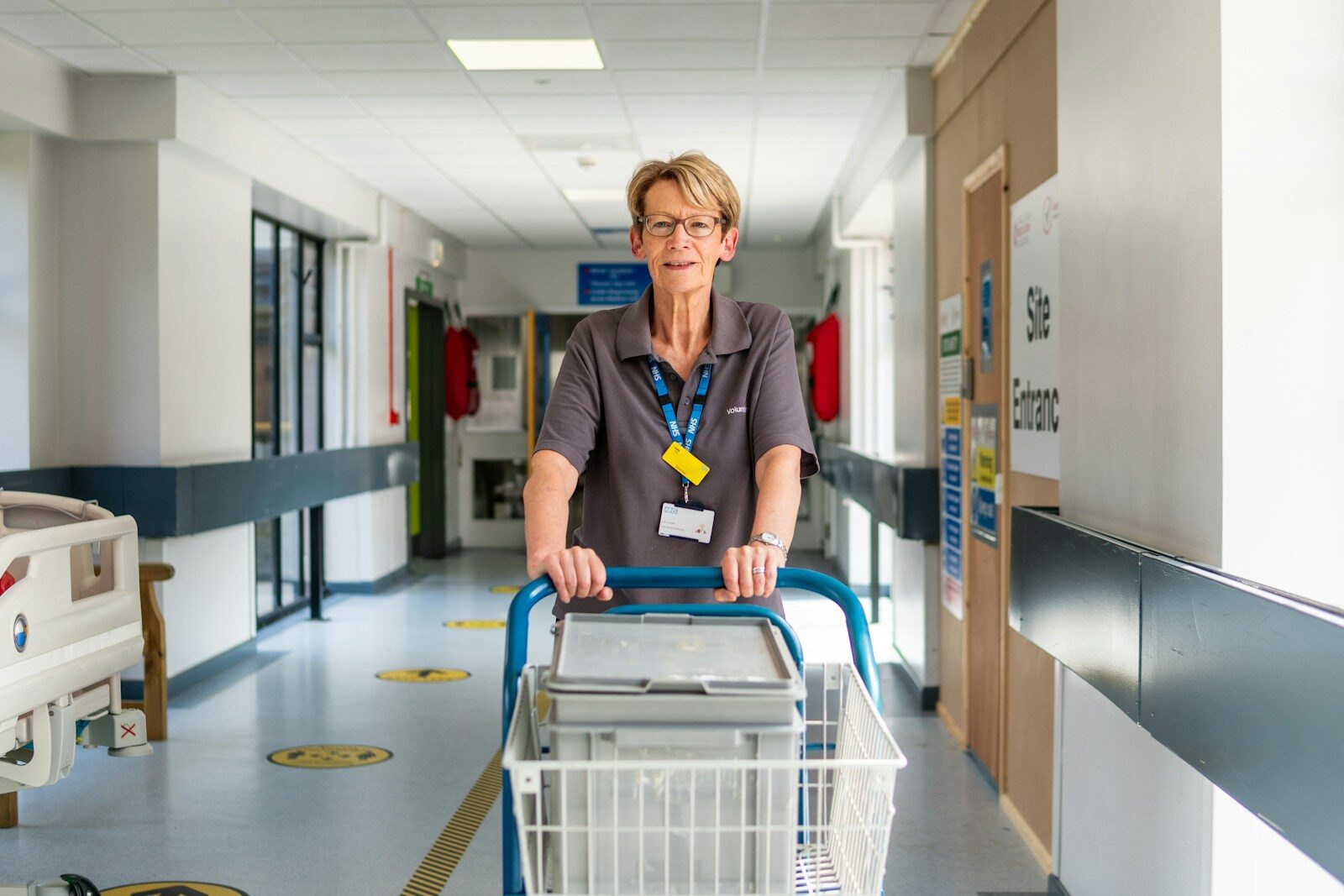
People who make this transition well tend to share a few traits: they can handle irregular hours, since nursing runs on shifts, not a 9-to-5, they have already worked in some kind of high-contact service or care role, and they treat the accelerated coursework as a full-time job rather than something to fit around a part-time schedule. The people who struggle most are usually the ones who underestimate the clinical hours requirement, since accelerated programs pack the same clinical rotations into a shorter calendar, which means less flexibility to work another job while you are in school.
What to Ask Yourself Before You Make the Leap
Before you make the decision to become a nurse, get honest answers to a few questions: Can you afford 12 to 18 months of reduced or no income while you are in an accelerated program? Are you comfortable with physically demanding, shift-based work, including nights, weekends, and holidays? And have you talked to working RNs about what the day-to-day actually looks like, beyond the job description? If you are still narrowing down whether nursing is the right fit at all, How to Find Your Ideal Career walks through a more structured way to test career options before you commit years and tuition to one. If nursing turns out not to be the pathway, Continuing Education for Your Career covers other credential routes worth comparing.
Common Mistakes People Make When They Become a Nurse
- Picking a program by convenience instead of accreditation. Only enroll in a program accredited by the ACEN or CCNE, since non-accredited programs can leave you ineligible to sit for the NCLEX-RN in your state.
- Underestimating the clinical hour load. Accelerated tracks do not reduce clinical hours, they compress them, which means most people cannot realistically hold down a full-time job during the program.
- Assuming any RN job is the same as any other. Bedside acute care, outpatient clinics, school nursing, and travel nursing all have different hours, pay structures, and stress profiles, so research the specialty before you assume “nurse” means one specific job.
Frequently Asked Questions About How to Become a Nurse
How long does it take to become a nurse if I already have a bachelor degree?
Accelerated BSN programs designed for people with an unrelated bachelor degree typically take 12 to 18 months, including prerequisite coursework, according to 2025 AACN program data covering 340 accelerated BSN programs nationally.
Is an ADN or a BSN better if you are changing careers?
An ADN gets you licensed faster and cheaper, but a BSN is increasingly preferred by hospitals, especially magnet-status facilities, and it is required for most leadership and specialty tracks. Many career-changers start with an ADN to get working sooner, then complete an RN-to-BSN bridge program while employed.
What happens if you do not pass the NCLEX-RN on your first attempt?
You can retest after a waiting period set by your state board, often 45 days, and many candidates who do not pass on the first attempt do pass on a subsequent one with focused remediation. The 91.2% first-time pass rate for 2024 dropped as the year went on, from 94.2% in Q1 to 82.2% in Q4, which NCSBN and nursing educators have linked to test-plan changes, so do not treat a retake as unusual or disqualifying.
The Bottom Line
The nursing shortage is real, the pay is solid, and the pathways to become a nurse without a healthcare background are more established than they have ever been, but none of that makes the accelerated coursework or the NCLEX-RN easier. Pick the pathway that matches your starting point, front-load your prerequisites, study for the license exam like it is a project with a deadline, and target the markets where the shortage is actually acute. That combination is what turns wanting to become a nurse into a job offer within about two years.
Anonymous and approximate. We store one number for this article and nothing about you.
Email digest
We also run a layoff tracker, built from company filings and official notices. A plain email summary of what changed on these trackers: headline numbers, the largest new entries, and links to the sources. You confirm your address by clicking a link we email you, and one click unsubscribes. Already subscribed? Use this form to change what you get. The boxes replace what you had.
Our mail provider records whether you open an email and which links you follow, including the confirmation email, which is measured before you have agreed to anything. Unsubscribing stops the sending and the recording together.
You can read every past edition first. Each one is kept permanently, exactly as it was sent.
Privacy note: what we store and how to erase it
What we store: your email address, the choices above, and timestamps (signed up, confirmed, last sent). Nothing else about you.
What our mail provider records: whether you opened an email and which links you followed, tied to your address. That is Brevo, the service that delivers these emails, and it works by adding a small invisible image and by routing links through its own address. We read it to see which sections people use. Unsubscribing stops the sending and the measuring at the same time, and erasing your row removes it from our side.
The confirmation email is measured too: the same invisible image is in the one message that asks your permission. If you open it, Brevo records that against your address before you have agreed to anything, and it records it even if you then never confirm. We would exempt that message if we could. Brevo offers no way to switch its measuring off for a single email, and the one setting that exists covers every email we send or none of them. If you would rather not be measured at all, do not open it. Nothing else is ever sent to an unconfirmed address, and the signup is deleted from our side after 30 days.
About the links: links in the digest pass through a counter on this site that adds 1 to a total for that link and sends you straight on. It records no identifier, no IP address and no browser details, so it counts how many times a link was followed and can never say who followed it.
What it is used for: sending you exactly the emails you ticked, nothing else. The address is never shared, sold, or used for any other purpose.
How to erase it: click the unsubscribe link in any email. That stops all sending immediately, and unsubscribed addresses, along with signups that were never confirmed, are hard-deleted automatically after 30 days. You can also ask via the contact page.