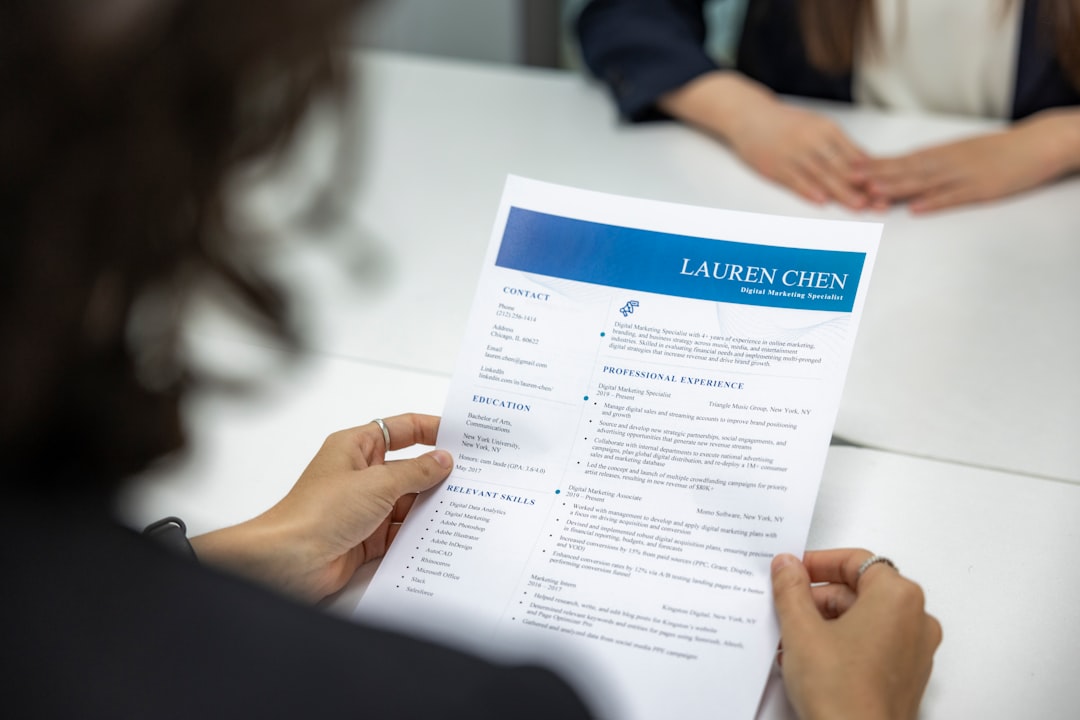
The one-page or two-page resume in 2026 debate has been going on for years, and the honest answer is that recruiters do not have a single universal preference. What they actually care about is whether every line on your resume earns its place. Understanding when a second page genuinely helps you, and when it just adds clutter, will serve you far better than following a blanket rule.
Where the One-Page Rule Came From
The one-page resume rule became popular when resumes were physically printed and handed to a recruiter who might be reviewing dozens of them in a single sitting. A shorter document was easier to scan quickly, and early career candidates rarely had enough real experience to fill more space anyway. That context still applies for some job seekers today, but it does not automatically apply to everyone.
When One Page Still Makes Sense
If you are a student, a recent graduate, or early in your career with two to four years of experience, a single page is usually still the right choice. At this stage, you likely have not accumulated enough distinct roles or achievements to justify more space, and packing a thin work history across two pages tends to create awkward white space that reads as padding rather than substance. Similarly, if you are making a significant career change and only a portion of your background is genuinely relevant to the new role, a tightly edited single page focused on your most transferable experience often makes a stronger impression than a longer resume padded with unrelated history.
When a Second Page Is Justified
Once you have roughly seven to ten years of experience, particularly across multiple roles or a more senior title, a second page often becomes necessary to represent your background honestly. Trying to compress a decade of meaningful, distinct accomplishments onto one page usually means cutting detail that actually helps you stand out, such as specific metrics, notable projects, or leadership experience. Technical fields, healthcare, and academia also tend to have their own norms where additional detail, such as certifications, publications, or specialized skills, genuinely needs the extra space to be represented accurately.
What Recruiters Actually Prefer
When recruiters are asked directly, most say they care far more about clarity and relevance than strict length. A well organized two-page resume where every bullet point ties clearly to results is preferred over a one-page resume that crams in small font and narrow margins to force everything to fit. The reverse is also true. A padded two-page resume with vague, repetitive descriptions reads worse than a crisp, well edited single page. Length becomes a problem only when it signals either inexperience trying to look substantial, through excessive white space or oversized fonts, or a lack of editing discipline, through repeated points and irrelevant detail.
How to Decide for Your Own Resume
Start by writing down everything relevant to the role you want, without worrying about length. Then edit ruthlessly, cutting anything that does not directly support your candidacy for this specific job. If what remains, edited honestly and without padding, fills one page, keep it at one page. If it genuinely fills two pages with substantive, specific content, let it run to two. What you should never do is stretch thin content to fill two pages, or cram substantial experience into one page at the cost of readability.
Formatting Tips That Make Either Length Work
Whichever length you land on, a few formatting habits keep a resume readable. Use consistent margins of at least half an inch, a font size no smaller than ten or eleven points, and clear section breaks so a recruiter can scan the document quickly rather than reading it line by line. If you are on the edge between one and two pages, look first for redundant phrasing or older, less relevant roles that could be trimmed to a single line, rather than shrinking your font or margins to force a fit.
A Simple Test Before You Submit
Before sending your resume, read through it and ask honestly whether every line adds something a recruiter needs to know to decide whether to interview you. If a bullet point exists mainly to fill space, cut it regardless of what that does to your page count. The one-page or two-page resume decision for 2026 comes down to this simple test far more than any fixed rule, and a resume built this way will read as more confident and more credible than one built around hitting a specific length.
Does Applicant Tracking Software Care About Length?
Most applicant tracking systems do not penalize a resume for being one or two pages, since the software is parsing structured data rather than counting pages the way a human might. What matters far more to these systems is that your work history, dates, and skills are formatted in a way the parser can read correctly, regardless of how many pages that information spans. This means you can make the one-page or two-page decision based on what best represents your experience to a human reader, without worrying that a second page will hurt you in the initial automated screening.
Industry Differences Worth Knowing
Some fields have their own unwritten norms around resume length. Academic and research roles often expect a curriculum vitae that can run several pages to account for publications, grants, and presentations, which is a different document entirely from a standard resume. Government and federal roles frequently expect significantly more detail than private sector resumes, sometimes running three or more pages because of how federal hiring evaluates specific qualifications. Creative fields such as design or marketing sometimes favor a shorter, highly visual one-page resume paired with a portfolio, since the resume itself is meant to be a quick introduction rather than the full picture of your work. Knowing the norm in your specific field can help you decide with more confidence rather than guessing at a universal rule.
What Happens When You Guess Wrong
If you are unsure and lean toward a shorter resume when a longer one would have served you better, the main risk is that a recruiter has less to go on and may not fully grasp the scope of your experience, particularly for more senior roles. If you lean toward a longer resume when a shorter one would have been stronger, the main risk is that a recruiter loses interest partway through a document that repeats itself or includes low value detail. Neither mistake is fatal on its own, but understanding these tendencies can help you catch and fix the issue before you submit a batch of applications rather than after weeks of silence.
A Quick Checklist Before You Finalize Length
Ask yourself a few direct questions before settling on a final page count. Does every bullet point include a specific result or responsibility, rather than a vague generality that could apply to almost anyone? Have you removed roles from more than fifteen years ago unless they are directly and unusually relevant to this specific application? Is your font size and margin within a normal, readable range rather than stretched or shrunk to hit a page target? If you can answer yes to each of these, whatever page count you land on is very likely the right one for this application, and you can stop second guessing the number itself and focus your remaining time on tailoring the content to the specific job.
Adjusting Length for Different Applications
It is worth remembering that the right length can change depending on which job you are applying for, even with the same career history. A senior candidate applying for a role that closely matches their most recent experience might comfortably fit a strong resume on one focused page, while the same candidate applying for a role that draws on a wider range of past experience may need a second page to show that broader relevance. Rather than keeping a single fixed version of your resume, it is worth maintaining a master document with your full history, then trimming it down for each application based on what that specific role actually needs to see, which naturally solves much of the one-page versus two-page question on a case by case basis.
Anonymous and approximate. We store one number for this article and nothing about you.
Email digest
We also run a layoff tracker, built from company filings and official notices. A plain email summary of what changed on these trackers: headline numbers, the largest new entries, and links to the sources. You confirm your address by clicking a link we email you, and one click unsubscribes. Already subscribed? Use this form to change what you get. The boxes replace what you had.
Our mail provider records whether you open an email and which links you follow, including the confirmation email, which is measured before you have agreed to anything. Unsubscribing stops the sending and the recording together.
You can read every past edition first. Each one is kept permanently, exactly as it was sent.
Privacy note: what we store and how to erase it
What we store: your email address, the choices above, and timestamps (signed up, confirmed, last sent). Nothing else about you.
What our mail provider records: whether you opened an email and which links you followed, tied to your address. That is Brevo, the service that delivers these emails, and it works by adding a small invisible image and by routing links through its own address. We read it to see which sections people use. Unsubscribing stops the sending and the measuring at the same time, and erasing your row removes it from our side.
The confirmation email is measured too: the same invisible image is in the one message that asks your permission. If you open it, Brevo records that against your address before you have agreed to anything, and it records it even if you then never confirm. We would exempt that message if we could. Brevo offers no way to switch its measuring off for a single email, and the one setting that exists covers every email we send or none of them. If you would rather not be measured at all, do not open it. Nothing else is ever sent to an unconfirmed address, and the signup is deleted from our side after 30 days.
About the links: links in the digest pass through a counter on this site that adds 1 to a total for that link and sends you straight on. It records no identifier, no IP address and no browser details, so it counts how many times a link was followed and can never say who followed it.
What it is used for: sending you exactly the emails you ticked, nothing else. The address is never shared, sold, or used for any other purpose.
How to erase it: click the unsubscribe link in any email. That stops all sending immediately, and unsubscribed addresses, along with signups that were never confirmed, are hard-deleted automatically after 30 days. You can also ask via the contact page.