The power of the spoken word shows up on every hiring scorecard whether or not anyone calls it that. Employers rank communication as the single most in-demand skill on LinkedIn for two years running, and 96.1 percent of employers call it “very” or “extremely” important in new hires, yet only 53.5 percent think recent graduates are actually good at it.
This guide checks what the research actually shows about verbal communication’s effect on hiring, pay, and career advancement, not just career-advice folklore about confidence and charisma. Every statistic here is checked against its original source, including a widely repeated public-speaking-fear claim that turns out to be false.
The Short Answer
The power of the spoken word is measurable in hiring data, though not in the way most advice implies. Employers consistently rank communication near the top of what they want: LinkedIn named it the most in-demand skill for two consecutive years, NACE’s 2025 Job Outlook found 67 percent of employers specifically seek verbal communication skills on resumes, and GMAC’s 2025 Corporate Recruiters Survey ranked communication third among the skills employers most want right now.
The catch is that most candidates fall short of that bar. NACE’s own data shows a real, quantified gap: employers rate communication’s importance at 4.57 out of 5, but rate recent graduates’ proficiency at only 3.62, a gap wide enough that closing it is a genuine competitive advantage rather than table stakes.
| Data Point | Figure |
|---|---|
| Employers seeking verbal communication skills (NACE 2025) | 67% |
| Importance employers place on communication (NACE, out of 5) | 4.57 |
| Proficiency employers see in recent grads (NACE, out of 5) | 3.62 |
| Communication rank among current hiring priorities (GMAC 2025) | 3rd |
| Organizations reporting a soft-skills gap (SHRM 2024) | 44% |
| Extra annual pay per 22.1 Hz lower CEO voice pitch (Duke) | $187,000 |
| Past-behavior interview question validity (Levashina et al.) | r = .31 |
| Situational interview question validity (Levashina et al.) | r = .25-.26 |
| Public speaking fear rank out of all fears (Chapman 2025) | #46 (33.7%) |
| U.S. adults with social anxiety disorder, past year (NIMH) | 7.1% |
What Employers Actually Say They Want
Communication tops LinkedIn’s most in-demand skills list for two years running, based on how often it appears in job postings and how often it’s held by people who get hired. NACE’s 2025 survey of 237 employers found 67 percent specifically list verbal communication skills as an attribute they look for, alongside problem-solving (roughly 90 percent) and teamwork (roughly 80 percent).
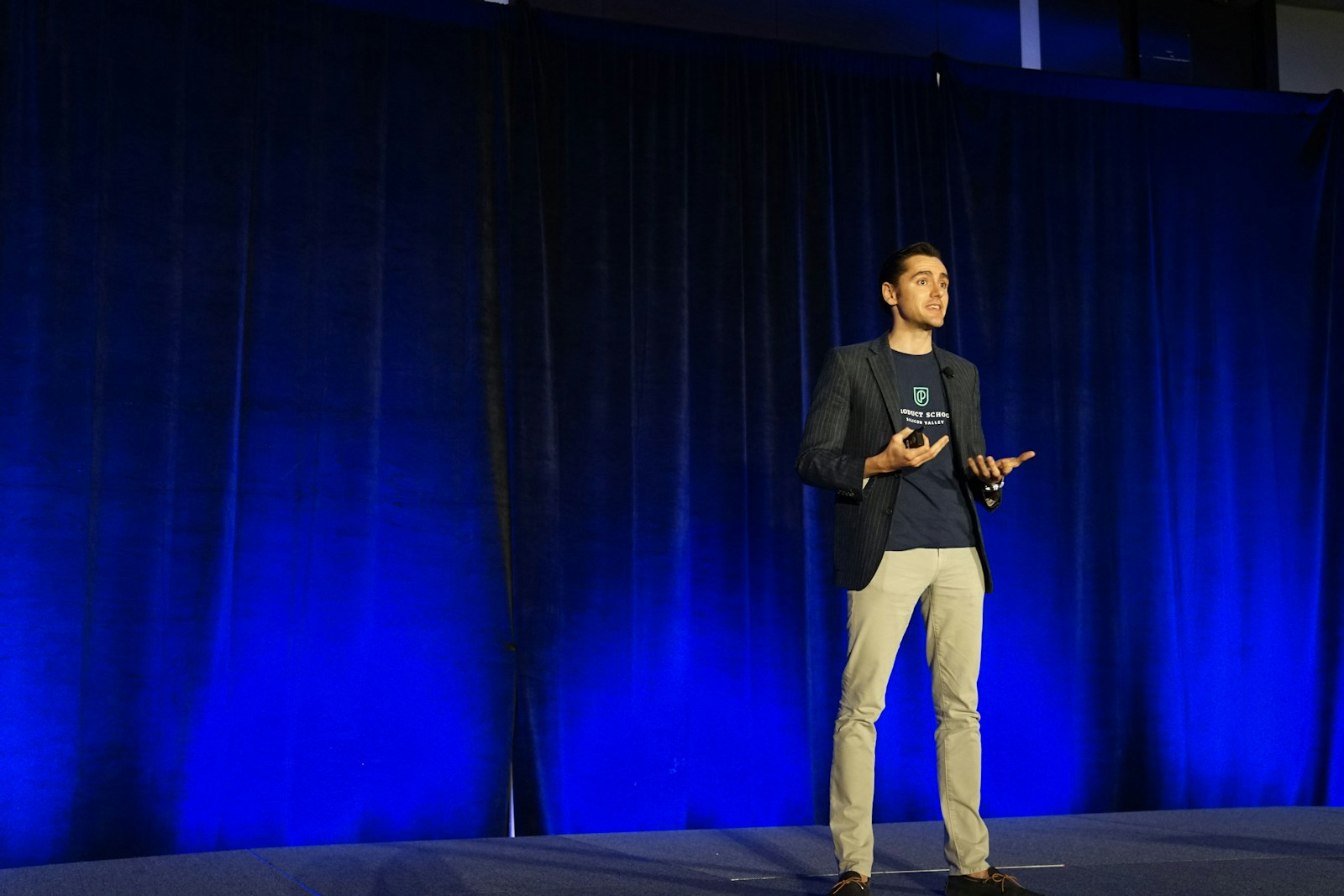
GMAC’s 2025 survey of more than 1,100 corporate recruiters worldwide found communication ranked third overall for current hiring needs, and more than half of respondents said verbal communication specifically mattered to them, ahead of most other named soft skills. The overlap across three separately run surveys, from three different organizations, is what makes the power of the spoken word a defensible hiring factor rather than a single survey’s fluke.
The Skills Gap Nobody’s Closing
A common assumption is that communication skill is something people either have or don’t. NACE’s proficiency data suggests the real story is a training gap, not a talent gap. SHRM’s 2024 Talent Trends report backs this up from the employer side, finding 44 percent of organizations that hired for a role requiring new skills said candidates lacked adequate soft skills, with communication specifically named alongside teamwork.
That gap cuts both ways for job seekers. A candidate who can demonstrably communicate well is competing against a pool where roughly half the applicants, by employers’ own ratings, cannot. The power of the spoken word in a job search is not abstract confidence, it’s a documented shortage other candidates aren’t fixing.
What the Research Says About the Power of the Spoken Word and Pay
The hardest data on the power of the spoken word and career outcomes comes from an unlikely place: CEO voice pitch. A Duke University study of 792 CEOs from the S&P 1500 found that a 22.1 Hz decrease in voice pitch correlated with $440 million more in company assets managed, $187,000 more in average annual pay, and roughly five extra months in the job.
That is a striking, if narrow, finding: it says something about a physical vocal trait correlating with outcomes, not that better speaking technique itself buys a raise.

A broader 2022 meta-analysis of 63 studies on nonverbal cues in job interviews found vocal delivery, loudness, pace, and pitch variation, measurably affects how interviewers rate candidates, though professional appearance was the single strongest predictor in their data. The same review noted voice quality is genuinely hard for people to change on their own, which is a more honest takeaway than most “speak with confidence” advice offers.
Why Structured Answers Show the Power of the Spoken Word in Interviews
One place the power of the spoken word is backed by strong, direct evidence is interview technique. A 2014 meta-analysis in Personnel Psychology reviewing decades of structured-interview research found past-behavior questions, the “tell me about a time when” format that techniques like STAR are built to answer, predict job performance at a validity of r = .31, compared to r = .25 to .26 for hypothetical situational questions.
That is not a marginal difference in a field where most predictors are weak. It means candidates who answer with a specific, structured example of what they actually did, rather than a general description of how they’d handle something, are giving interviewers more genuinely predictive information, not just a more polished-sounding answer.
Common Misconceptions About the Power of the Spoken Word
A widely repeated claim is that public speaking is the single most common fear people have, more common than the fear of death. The 2025 Chapman University Survey of American Fears, a nationally representative survey, found public speaking ranked 46th out of all fears measured, at 33.7 percent, nowhere near the top and far from a majority.
A second misconception conflates ordinary public-speaking nerves with a clinical condition. NIMH data puts social anxiety disorder, the closest diagnosable category, at 7.1 percent of U.S. adults in the past year and 12.1 percent over a lifetime, with roughly seven in ten of those affected reporting moderate to serious impairment. That is a real, meaningful group, but it is a fraction of the population, not the near-universal fear pop psychology often claims.
A third misconception is that “the power of the spoken word” mainly means charisma or stage presence. The strongest evidence above, structured past-behavior answers and a documented employer skills gap, points to substance and preparation, not performance polish, as the more reliably rewarded trait.
Careers Where Speaking Skill Is Explicitly Part of the Job
For some roles, the power of the spoken word is written directly into the job description rather than implied. O*NET, the U.S. Department of Labor’s occupational database, rates Speaking as a core skill across occupations on a 0-100 scale, with postsecondary teaching roles and clergy positions rating in the 94-97 range.
- Postsecondary teachers: Speaking rated 94-97 out of 100 by O*NET, among the highest of any occupation group.
- Clergy: Speaking rated in the same 94-97 range, reflecting a role built almost entirely around verbal delivery.
- Public Relations Specialists: a median annual wage of $74,750 with 6% projected job growth, per the Bureau of Labor Statistics.
- Training and Development Managers: a median annual wage of $133,000 with 6% projected job growth, per the Bureau of Labor Statistics.
Readers deciding whether to lean into a communication-heavy career path rather than just improving interview performance may find it useful to see how that plays out in adjacent decisions, like how to build your personal brand for career growth, since visible communication skill and personal brand tend to reinforce each other over a career.
How to Put the Power of the Spoken Word to Work in an Interview
The research above points to a specific, learnable set of habits rather than a personality trait someone either has or lacks. The clearest one is structural: build two or three past-behavior examples in advance, in the specific-situation, specific-action, specific-result shape that Levashina and colleagues found predicts performance at r = .31, and practice saying them out loud rather than only writing them down. A rehearsed answer that is delivered conversationally still outperforms an unrehearsed one, since the advantage comes from the content’s specificity, not from sounding spontaneous.
The second habit addresses delivery rather than content. The SPSP-reviewed meta-analysis found vocal pace, loudness, and pitch variation measurably affect interviewer ratings, even though voice itself is hard to change quickly. A practical substitute most candidates skip is simply recording a practice answer and listening back once, which surfaces filler words and a flat pace far faster than rehearsing silently.
Combined with NACE’s finding that most candidates already fall short of what employers expect, closing even part of that gap through preparation, not raw talent, is where the power of the spoken word becomes something a job seeker can actually control.
Why the Power of the Spoken Word Still Matters in 2026
Communication’s ranking is not guaranteed to hold forever. GMAC’s own data shows employers expect it to slide to sixth place among skills they’ll prioritize over the next five years as technical and AI-related skills rise. That makes the current moment, when communication still ranks in the top three or five across multiple major employer surveys, a narrower window than career advice usually implies.
The practical case for the power of the spoken word in 2026 is less about long-term certainty and more about a documented, current gap: employers say they want it more than candidates are demonstrating it, right now, across independently run surveys from LinkedIn, NACE, GMAC, and SHRM.
The Bottom Line
The power of the spoken word holds up under scrutiny, though not in its most exaggerated forms. Communication ranks among the top skills employers want across multiple 2024 and 2025 surveys, a real proficiency gap exists between what employers expect and what they see, and structured, specific verbal answers in interviews carry genuine predictive validity. The popular claim that public speaking is everyone’s top fear does not hold up against current survey data.
For job seekers, the actionable version is narrower and more useful than “be more confident”: prepare specific, structured examples for interview questions rather than general answers, and recognize that closing a well-documented communication gap is a real advantage precisely because most other candidates, by employers’ own account, are not closing it either.
Frequently Asked Questions About the Power of the Spoken Word
Do employers really rank communication as a top hiring skill?
Yes, across multiple independent 2024-2025 surveys. LinkedIn ranked it the most in-demand skill two years running, GMAC’s 2025 survey ranked it third among current hiring priorities, and NACE found 67 percent of employers specifically seek verbal communication skills.
Is public speaking really the most common fear, more than death?
No. The 2025 Chapman University Survey of American Fears found public speaking ranked 46th out of all fears measured, at 33.7 percent, not first and not close to a majority.
Does speaking ability actually affect pay?
The clearest evidence is narrow but striking: a Duke University study of 792 CEOs found lower vocal pitch correlated with $187,000 more in average annual pay and $440 million more in company assets managed, though this measures a vocal trait, not general speaking skill.
Why do structured interview answers work better than general ones?
A 2014 meta-analysis found past-behavior interview questions, the format techniques like STAR are built to answer, predict job performance at r = .31, meaningfully higher than the r = .25 to .26 validity of hypothetical situational questions.
Is there a real skills gap in verbal communication among job candidates?
Yes. NACE’s 2025 data shows employers rate communication’s importance at 4.57 out of 5 but rate recent graduates’ proficiency at only 3.62, and SHRM separately found 44 percent of organizations report a soft-skills gap, including communication, among candidates.
Anonymous and approximate. We store one number for this article and nothing about you.
Email digest
We also run a layoff tracker, built from company filings and official notices. A plain email summary of what changed on these trackers: headline numbers, the largest new entries, and links to the sources. You confirm your address by clicking a link we email you, and one click unsubscribes. Already subscribed? Use this form to change what you get. The boxes replace what you had.
Our mail provider records whether you open an email and which links you follow, including the confirmation email, which is measured before you have agreed to anything. Unsubscribing stops the sending and the recording together.
You can read every past edition first. Each one is kept permanently, exactly as it was sent.
Privacy note: what we store and how to erase it
What we store: your email address, the choices above, and timestamps (signed up, confirmed, last sent). Nothing else about you.
What our mail provider records: whether you opened an email and which links you followed, tied to your address. That is Brevo, the service that delivers these emails, and it works by adding a small invisible image and by routing links through its own address. We read it to see which sections people use. Unsubscribing stops the sending and the measuring at the same time, and erasing your row removes it from our side.
The confirmation email is measured too: the same invisible image is in the one message that asks your permission. If you open it, Brevo records that against your address before you have agreed to anything, and it records it even if you then never confirm. We would exempt that message if we could. Brevo offers no way to switch its measuring off for a single email, and the one setting that exists covers every email we send or none of them. If you would rather not be measured at all, do not open it. Nothing else is ever sent to an unconfirmed address, and the signup is deleted from our side after 30 days.
About the links: links in the digest pass through a counter on this site that adds 1 to a total for that link and sends you straight on. It records no identifier, no IP address and no browser details, so it counts how many times a link was followed and can never say who followed it.
What it is used for: sending you exactly the emails you ticked, nothing else. The address is never shared, sold, or used for any other purpose.
How to erase it: click the unsubscribe link in any email. That stops all sending immediately, and unsubscribed addresses, along with signups that were never confirmed, are hard-deleted automatically after 30 days. You can also ask via the contact page.