Learning how to become a steeplejack means training for one of the more unusual and physically demanding trades in construction, climbing church steeples, chimneys, and communication towers to do work that most contractors will not touch, and getting paid a genuinely competitive wage for the willingness to do it.
The word itself sounds almost archaic, and in a sense it is. Steeplejacks have been repairing tall structures since church steeples needed maintenance, but the modern version of the trade looks less like a Victorian tradesman with a ladder and more like a certified rope access technician with the same skill set used on oil rigs, wind turbines, and cell towers.
According to Salary.com, the average steeplejack in the United States earns $52,081 a year, or about $25 an hour, with a typical range from roughly $44,342 at the entry level to $60,022 for experienced technicians.
The U.S. Bureau of Labor Statistics tracks the closely related trade of structural iron and steel workers separately, reporting a median annual wage of $62,780 in 2025 across 68,300 workers, with 3 percent projected growth from 2025 to 2035 and roughly 6,800 annual openings across all ironworker specialties, mostly from workers retiring or leaving the field.
This guide covers what the job actually involves, why it pays as well as it does for a trade with no four-year degree requirement, and the five essential facts anyone considering how to become a steeplejack should understand before pursuing it.
The Short Answer
Learning how to become a steeplejack does not require a college degree, but it does require real physical fitness, genuine comfort working at extreme heights, and a recognized rope access certification, most commonly through SPRAT, since that credential is what most employers actually check before hiring. Most people enter through an adjacent trade such as painting, roofing, or structural ironwork rather than starting in steeplejack work directly, then add rope access certification once they have basic trade skills.
Skipping the certification step and trying to get hired on physical toughness alone is the most common reason capable, fit candidates get passed over.
What a Steeplejack Actually Does
A steeplejack repairs, maintains, or restores tall structures that are difficult or impossible to reach with standard scaffolding, including church steeples, factory chimneys, water towers, and communication towers. The work itself spans several trades rolled into one: brickwork and masonry repair, painting and coating application, roofing work on steep or narrow surfaces, and installing or inspecting lightning protection systems.
The access method is what separates a steeplejack from a general construction worker. Rather than relying exclusively on scaffolding or aerial lifts, steeplejacks are trained in rope access techniques, the same certified system used by technicians who inspect wind turbine blades or perform maintenance on offshore platforms. This is also why the modern trade increasingly overlaps with what is formally called rope access work, even though “steeplejack” remains the more recognizable name for climbing tall structures specifically.
Religious buildings remain one of the steadiest sources of work, since churches with aging steeples need periodic structural inspection, repointing, and weatherproofing regardless of the broader construction market, which gives the trade a degree of demand stability that more cyclical construction specialties do not always have.
Anyone researching how to become a steeplejack should also expect the work to be seasonal in colder climates, since ice, high wind, and freezing temperatures make rope access work unsafe for parts of the year, which is why many technicians in northern regions supplement steeple and tower work with adjacent indoor trade work during winter months.
Why This Niche Trade Pays More Than People Expect
The pay for learning how to become a steeplejack sits meaningfully above many entry-level trades specifically because so few people are willing or physically able to do the work. A typical steeplejack earning the reported median of $52,081 a year is earning more than the median wage for many indoor trade positions, and the closely related structural iron and steel worker category shows why: the Bureau of Labor Statistics reports a median of $62,780 a year for that trade, well above the median for all occupations nationally.
That wage premium exists because the barrier to entry is not credentials or schooling, it is tolerance for genuine physical risk. Employers pay more for workers who can be trusted at height under safety protocols than for workers who simply have a certificate, which is part of why real rope access certification, rather than general trade experience alone, tends to separate people who get hired quickly from people who struggle to break in despite being physically capable.
The 3 percent projected growth for structural iron and steel workers through 2035, combined with roughly 6,800 annual openings across ironworker specialties nationally, reflects steady replacement demand from an aging trade workforce rather than explosive growth, which is a realistic expectation to have when learning how to become a steeplejack rather than assuming the niche nature of the work translates into a hiring boom.
| Trade | Median Annual Wage | Typical Range |
|---|---|---|
| Steeplejack (Salary.com) | $52,081 | $44,342 – $60,022 |
| Structural Iron & Steel Worker (BLS, 2025) | $62,780 | varies by region and employer |
The comparison above is useful context for anyone weighing how to become a steeplejack against a more conventional indoor trade: the entry-level range starts close to many standard construction jobs, but the top end climbs well past them once a technician has logged real rope access hours and a track record of finished jobs.
The 5 Essential Facts About How to Become a Steeplejack
1. No degree is required, but physical fitness is non-negotiable
Steeplejack work does not require a bachelor’s degree or even, in most cases, a specific trade school program before entry. What it does require is documented physical fitness, comfort with heights that most people find genuinely frightening, and the ability to pass a physical assessment that many general contracting jobs never ask for.
This is the first filter most candidates fail, and it has nothing to do with skill. Employers in this trade routinely see fit, capable tradespeople from other specialties wash out during their first few climbs simply because sustained comfort at extreme height cannot be faked or willed into existence quickly.
2. Rope access certification is the credential that actually matters
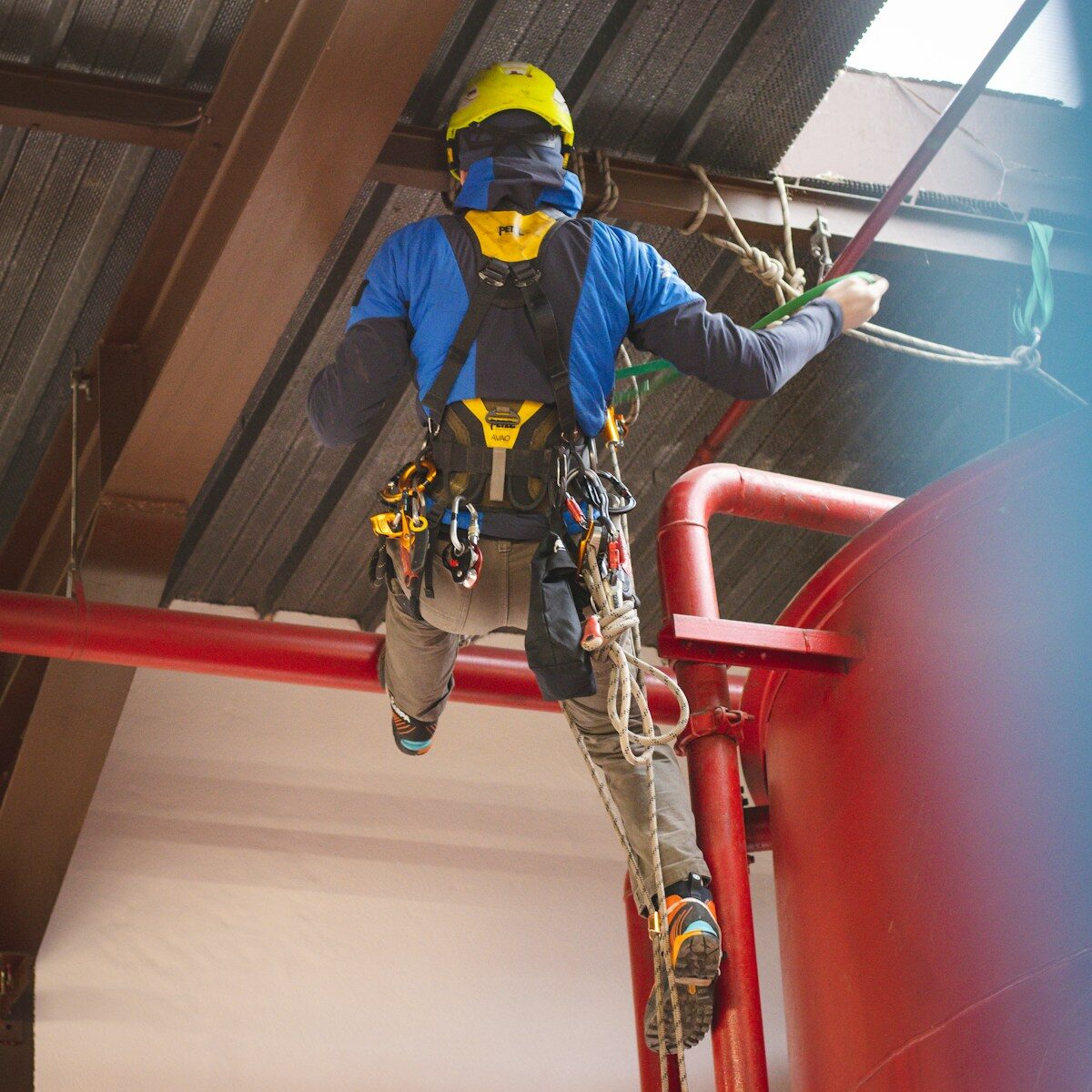
According to SPRAT, the primary rope access certification body most employers in this space recognize, becoming a Level 1 technician requires no prior rope access experience. Advancing to Level 2 or Level 3, however, each requires documenting at least 500 hours of rope access work completed at the previous certification level before an employer or evaluator will sign off on the next one.
This structure matters enormously for anyone learning how to become a steeplejack, because it means the credential is earned through logged, verifiable field hours rather than a single class or exam. A candidate who understands this timeline going in, and plans their first year or two around accumulating certified hours rather than expecting to skip levels, moves through the trade considerably faster than one who does not.
Most training providers also require a refresher evaluation every few years to keep a certification active, which means learning how to become a steeplejack is not a one-time credentialing event but an ongoing commitment to documented, current competence. Employers checking a technician’s certification status will see a lapsed credential the same way they would see no credential at all, which is why experienced steeplejacks build renewal deadlines into their annual planning rather than letting certifications quietly expire between jobs.
3. Most people enter through an adjacent trade first
Very few steeplejacks start their careers in steeplejack work specifically. The more common path runs through an adjacent trade, commercial painting, roofing, masonry, or structural ironwork, where a worker builds basic trade competence and safety habits before adding rope access certification on top of an existing skill set.
This sequencing works because employers hiring for height work want to see both the physical and technical qualification together. A certified rope access technician with no trade skill is limited in what jobs they can actually perform once they reach the structure, while a skilled tradesperson with no height certification cannot access the work in the first place. Building both, in either order, is what makes a candidate genuinely hireable.
4. The work is physically dangerous and safety training is not optional
Working at extreme height on structures like chimneys, steeples, and towers carries real fall risk, and every legitimate employer in this trade requires fall protection training, harness inspection procedures, and rescue protocol knowledge before allowing a technician to work unsupervised. This is not bureaucratic overhead, it is the actual difference between a sustainable long-term career and a serious injury.
Anyone evaluating how to become a steeplejack should treat safety certification renewal and equipment inspection habits as core professional skills, not administrative tasks to complete once and forget. The technicians who last decades in this trade are consistently the ones who never treat safety protocol as optional, even after years of experience.
5. Specializing in a structure type builds a steadier career

Steeplejacks who build a reputation around a specific structure type, religious buildings, industrial chimneys, or communication towers, tend to develop steadier, more predictable work than generalists who take any height job that comes available. Church and religious building maintenance in particular tends to be less cyclical than commercial construction, since aging steeples require ongoing structural attention regardless of the broader building market.
Specializing also makes marketing and referrals dramatically easier, since a property manager or church committee looking for steeple repair work searches for exactly that, not a generic “height work contractor,” which mirrors how specialization pays off in most skilled trades once a worker has the baseline certification in place.
What Separates People Who Build a Real Career From People Who Wash Out
The technicians who build lasting careers after learning how to become a steeplejack treat the rope access certification path seriously from day one, log their hours honestly rather than trying to shortcut the 500-hour requirements between levels, and pair their height certification with genuine trade skill rather than expecting to be hired on physical courage alone.
People who wash out tend to underestimate how much sustained comfort at height differs from a single thrilling climb, skip proper fall protection habits once they feel experienced, or expect the niche nature of the work to guarantee steady hiring without building the trade skills that make them useful once they reach a structure.
If you are still exploring whether a physically demanding specialty trade fits your broader goals, how to find your ideal career is worth reviewing, and setting career goals covers how to plan a multi-year skill progression like the one this trade requires.
Common Mistakes When Trying to Become a Steeplejack
- Trying to get hired on physical toughness alone, without a rope access certification. Employers need documented, verifiable proof of height competence, not just a candidate’s word that they are comfortable climbing.
- Expecting to skip certification levels instead of logging the required hours. SPRAT’s structure requires at least 500 documented hours at each level before advancing, and trying to shortcut that timeline only delays getting hired for higher-level work.
- Treating safety protocol as optional once experience builds up. The technicians who last decades in this trade are the ones who never get casual about fall protection, harness inspection, or rescue procedure, no matter how many climbs they have logged.
- Taking any height job available instead of specializing. Generalists compete with every other height contractor for every job, while a technician known specifically for steeple, chimney, or tower work builds referral-based demand that is far steadier.
Any single one of these mistakes is recoverable, but together they explain most of the difference between technicians who successfully learn how to become a steeplejack and build a stable, well-paid career in this trade, and capable people who try it briefly and move on to something else.
Frequently Asked Questions About How to Become a Steeplejack
Do you need a college degree to become a steeplejack?
No. Learning how to become a steeplejack does not require a bachelor’s degree, and most working steeplejacks enter through an adjacent trade such as painting, roofing, or ironwork combined with a rope access certification such as SPRAT rather than through any formal degree program.
How long does it take to become a fully certified steeplejack?
There is no fixed timeline for how to become a steeplejack, but a realistic expectation is one to two years to gain basic trade competence and Level 1 rope access certification, followed by roughly another one to two years to log the 500 hours required for Level 2 certification, assuming steady work.
Is steeplejack work the same as rope access work?
They overlap significantly. Modern steeplejacks are generally trained in the same certified rope access systems used across other height-work industries, though “steeplejack” specifically refers to climbing and repairing tall structures like steeples, chimneys, and towers, while “rope access technician” is the broader industry term for the certification and access method itself.
Is becoming a steeplejack worth it compared to a standard construction trade?
For someone genuinely comfortable at extreme heights, the pay premium, a median of roughly $52,081 a year according to Salary.com and $62,780 for the closely related structural iron and steel worker category according to the Bureau of Labor Statistics, can be meaningfully higher than many standard indoor trades. For someone who is not genuinely comfortable at height, no pay premium makes the work sustainable long term.
What tools or gear does someone learning how to become a steeplejack need to buy?
Most employers and training providers supply or specify the core rope access gear, harnesses, descenders, backup devices, and helmets, since equipment standards are part of what SPRAT certification actually verifies. A newcomer typically invests in personal protective clothing and, once independent, a personal equipment kit that meets certification inspection standards, but the largest upfront investment is time spent logging certified hours rather than money spent on tools.
The Bottom Line
Learning how to become a steeplejack is realistic without a college degree, but it requires two things most trades do not demand together: verified comfort at extreme heights and a properly logged rope access certification path through a body like SPRAT. Enter through an adjacent trade, treat the 500-hour certification requirements as a real timeline rather than an obstacle to shortcut, and never treat safety protocol as optional once you have experience.
Do that consistently, and the pay premium this niche trade offers, well above many standard entry-level construction positions, reflects a genuinely sustainable specialty career rather than a brief novelty job.
Anonymous and approximate. We store one number for this article and nothing about you.
Email digest
We also run a layoff tracker, built from company filings and official notices. A plain email summary of what changed on these trackers: headline numbers, the largest new entries, and links to the sources. You confirm your address by clicking a link we email you, and one click unsubscribes. Already subscribed? Use this form to change what you get. The boxes replace what you had.
Our mail provider records whether you open an email and which links you follow, including the confirmation email, which is measured before you have agreed to anything. Unsubscribing stops the sending and the recording together.
You can read every past edition first. Each one is kept permanently, exactly as it was sent.
Privacy note: what we store and how to erase it
What we store: your email address, the choices above, and timestamps (signed up, confirmed, last sent). Nothing else about you.
What our mail provider records: whether you opened an email and which links you followed, tied to your address. That is Brevo, the service that delivers these emails, and it works by adding a small invisible image and by routing links through its own address. We read it to see which sections people use. Unsubscribing stops the sending and the measuring at the same time, and erasing your row removes it from our side.
The confirmation email is measured too: the same invisible image is in the one message that asks your permission. If you open it, Brevo records that against your address before you have agreed to anything, and it records it even if you then never confirm. We would exempt that message if we could. Brevo offers no way to switch its measuring off for a single email, and the one setting that exists covers every email we send or none of them. If you would rather not be measured at all, do not open it. Nothing else is ever sent to an unconfirmed address, and the signup is deleted from our side after 30 days.
About the links: links in the digest pass through a counter on this site that adds 1 to a total for that link and sends you straight on. It records no identifier, no IP address and no browser details, so it counts how many times a link was followed and can never say who followed it.
What it is used for: sending you exactly the emails you ticked, nothing else. The address is never shared, sold, or used for any other purpose.
How to erase it: click the unsubscribe link in any email. That stops all sending immediately, and unsubscribed addresses, along with signups that were never confirmed, are hard-deleted automatically after 30 days. You can also ask via the contact page.