The importance of bedside manner in nursing gets treated as a soft skill, something nice to have on top of clinical competence, when the actual research paints a different picture: how a nurse communicates measurably affects patient outcomes, hospital reimbursement, and even the nurse’s own risk of burnout.
This guide moves past the vague “be kind to patients” advice and walks through what bedside manner actually means as a professional skill, what the research shows about its impact, the specific frameworks nursing programs use to teach it, and the practical pressures making it harder to maintain in 2026.
The Short Answer
The importance of bedside manner in nursing comes down to three connected facts: nurse communication quality is directly tied to patient satisfaction scores that affect hospital Medicare reimbursement, poor communication is a factor in a meaningful share of malpractice claims, and the relationship between burnout and bedside manner runs in both directions, meaning weak communication skills and burnout tend to reinforce each other over time.
| Data Point | Figure |
|---|---|
| Patients who would recommend hospital (Nursing Open study) | 87.9% |
| Malpractice claims involving communication failure (2009-2013 data) | ~30% |
| Malpractice claims involving communication failure (2001-2011 data) | ~49% |
| Average nursing indemnity payout, communication-related claims | $328,000+ |
| Shift time some nurses spend on documentation | up to 33% |
What Bedside Manner Actually Means in Clinical Terms
Nursing education literature frames the importance of bedside manner around a specific skill called therapeutic communication, not just general friendliness. This includes active listening, open-ended questions, reflection, appropriate use of silence, and reading nonverbal cues like eye contact, tone, and body language, all aimed at building genuine rapport rather than simply being polite.
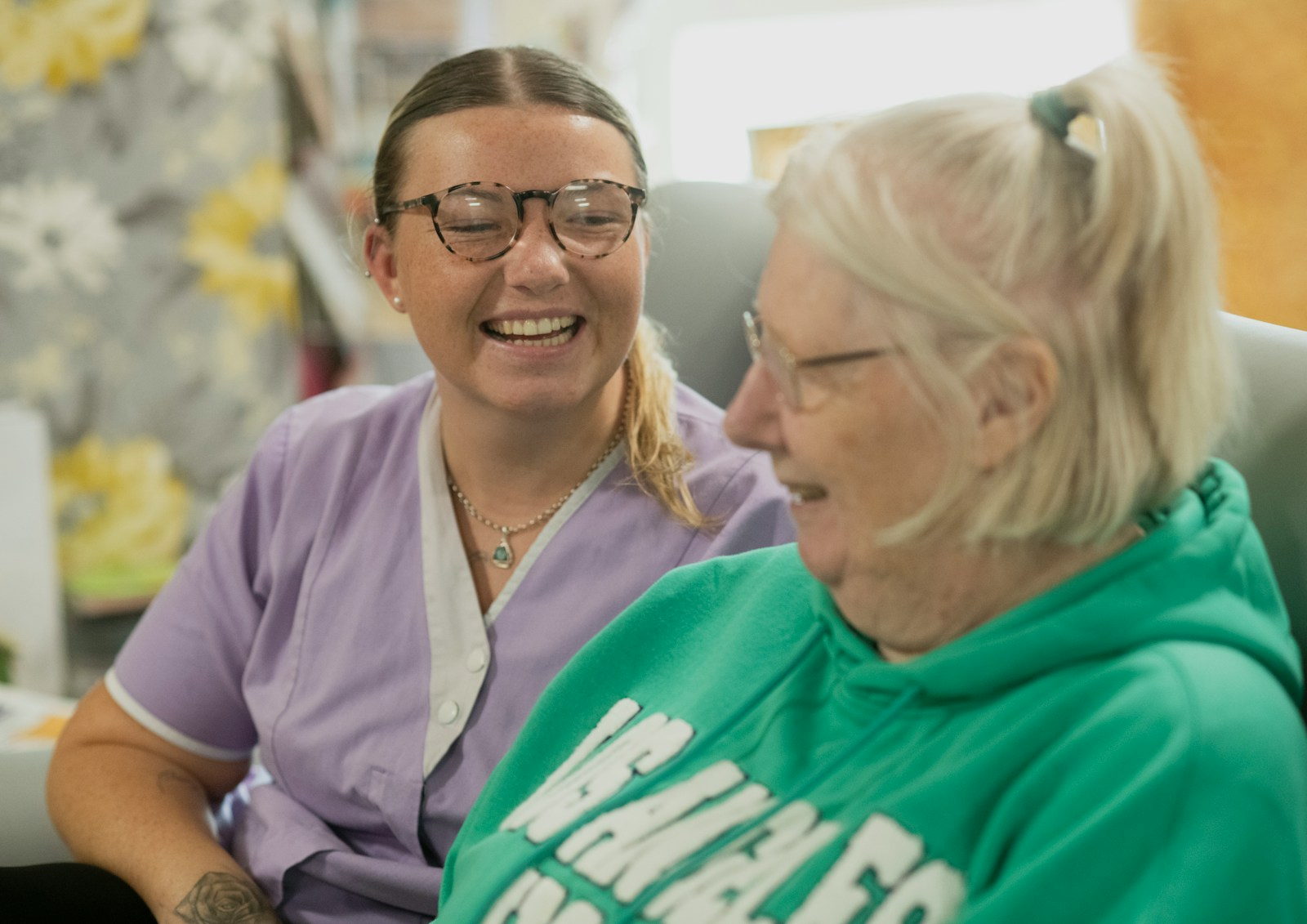
Framing bedside manner this way matters because it turns a vague personality trait into a learnable, assessable clinical skill, which is exactly how modern nursing programs increasingly treat it, and it’s the clearest starting point for understanding the importance of bedside manner as a professional competency rather than assuming it is something a nurse either has or doesn’t.
What the Research Actually Shows About the Importance of Bedside Manner
A study of 635 hospital patients published in Nursing Open found that “caring by nurses” was the highest-rated dimension of care, while the clearest gap was in how well nurses explained tests and treatments to patients, the specific piece of bedside manner tied most directly to a patient actually understanding their own care. Nearly 88 percent of patients in that study said they would recommend the hospital, underscoring how much day-to-day communication shapes overall patient experience.
A separate and often-cited landmark study published in JAMA found that primary care physicians who had never been sued used measurably more communication behaviors than physicians who had been sued, including more orientation about what to expect during a visit, more solicitation of the patient’s own opinions, and slightly longer visits. While that particular study focused on physicians, it remains one of the most rigorous pieces of evidence connecting communication style directly to malpractice risk.
How Bedside Manner Connects to Hospital Reimbursement
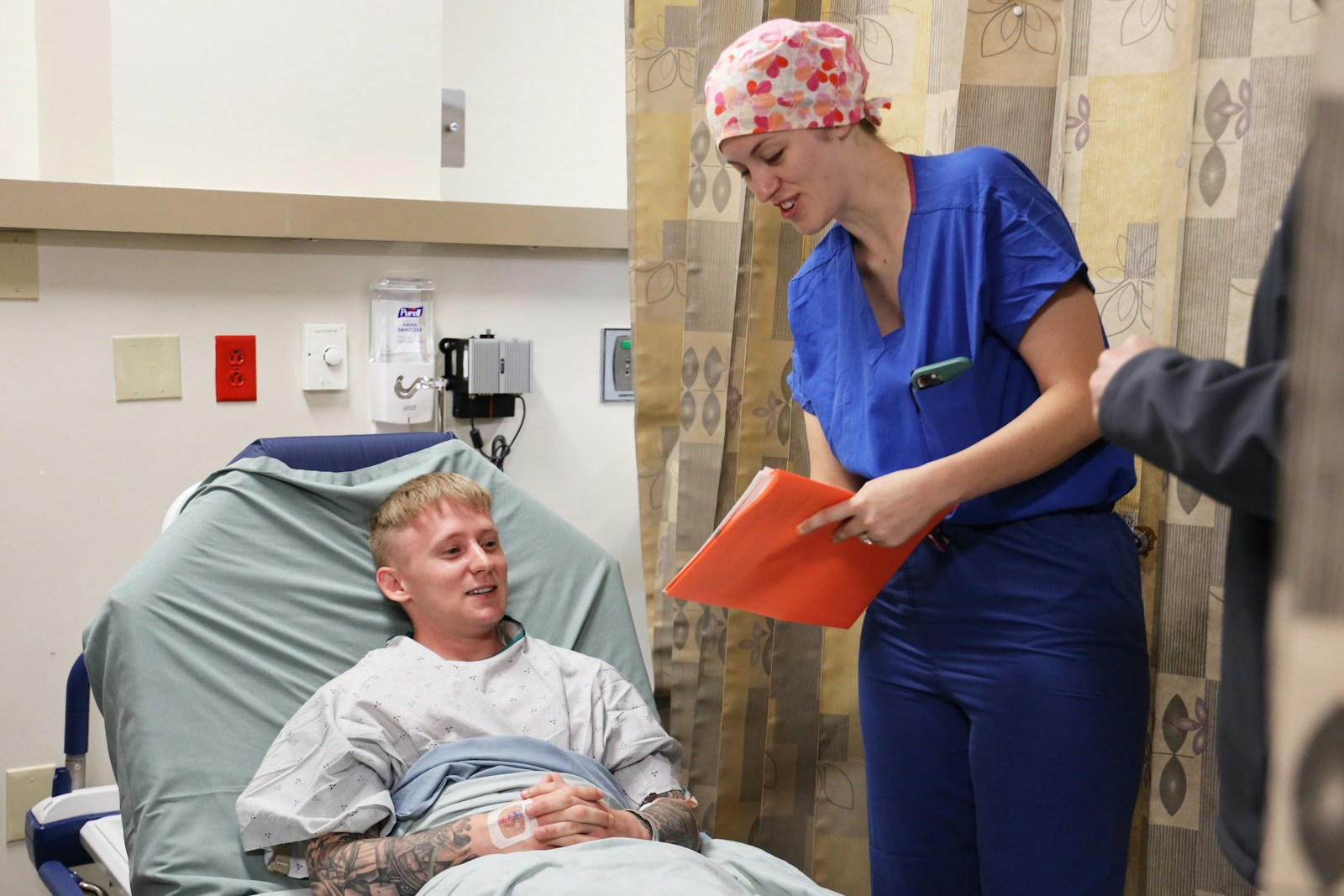
“Communication with Nurses” is one of the domains measured by HCAHPS, the patient experience survey that feeds directly into Medicare’s Hospital Value-Based Purchasing program, meaning nurse communication quality has a real, measurable connection to hospital revenue rather than being a purely feel-good metric. Research has found nurse communication carries a moderately strong correlation with a hospital’s overall HCAHPS rating, and a supportive nursing work environment shows an even stronger association with those scores than staffing ratios alone.
This financial link is one of the more underappreciated reasons the importance of bedside manner has grown inside hospital administration, since a unit with consistently strong nurse-patient communication is directly protecting a measurable piece of hospital funding, not just providing a nicer patient experience, which is a very different argument than the usual “be kinder” framing.
The Genuinely Disputed Malpractice Statistics
Two frequently cited statistics claim that either 30 percent or 49 percent of malpractice claims involve a communication failure, and both numbers deserve real scrutiny before being repeated. The 30 percent figure comes from a CRICO analysis of more than 23,000 claims filed between 2009 and 2013, and the 49 percent figure comes from a separate analysis of claims filed between 2001 and 2011, meaning both are measuring different time periods and different claim samples rather than a single settled fact.
What both analyses agree on is more useful than either single number: claims involving a communication failure were less likely to be dropped or denied than claims without one, and nursing specifically accounted for roughly a third of communication-related claims in the CRICO data, with an average indemnity payout above $300,000 in nursing cases involving a communication breakdown.
SBAR: The Framework Nurses Use for Critical Communication
SBAR, which stands for Situation, Background, Assessment, and Recommendation, is one of the most widely taught frameworks for structuring high-stakes clinical communication, particularly during shift handoffs and physician notifications. The framework’s value lies in forcing a nurse to organize urgent information into a predictable structure, reducing the odds that a critical detail gets lost in an unstructured conversation during a high-pressure moment.
Unlike bedside manner in the broader sense, SBAR is specifically about communication between clinical staff rather than between a nurse and a patient, but the same underlying skill, organizing information clearly under pressure, reinforces the calm, structured communication style that also shows up in the importance of bedside manner in direct patient interactions.
AIDET: A Framework Built for Patient-Facing Communication
AIDET, an acronym for Acknowledge, Introduce, Duration, Explanation, and Thank You, is a patient-facing communication framework used specifically to structure interactions in a way that reduces patient anxiety and builds trust from the first moment of an encounter. Nursing programs and hospital systems have adopted it as a practical, repeatable checklist rather than leaving good bedside manner to individual personality or instinct.
- Acknowledge the patient immediately upon entering the room, making eye contact before starting any task.
- Introduce yourself by name and role, even during a brief or repeat visit.
- Duration – tell the patient roughly how long a task or wait will take.
- Explanation – describe what you’re doing and why in plain, non-clinical language.
- Thank you – close the interaction by thanking the patient for their patience or cooperation.
Frameworks like AIDET matter precisely because the importance of bedside manner is easiest to maintain when it’s built into a repeatable habit, rather than something a nurse has to consciously reinvent during every single patient interaction on a demanding shift, and it explains why so many hospitals now train new hires on it directly.
How Nursing Schools Actually Assess Bedside Manner
Objective Structured Clinical Examinations, or OSCEs, use simulated patient encounters, often with trained actors playing the patient, to assess a nursing student’s communication skills in a standardized, observable format rather than relying on subjective instructor impressions. This approach treats communication as a measurable clinical competency on par with a physical assessment skill, which reflects how seriously the importance of bedside manner is now taken in formal nursing education.
The shift toward OSCE-based communication assessment over the past decade reflects a broader recognition in nursing education of the importance of bedside manner as a trainable skill with observable components, not simply a personality trait that some nurses happen to have and others don’t.
The Two-Way Relationship Between Burnout and Bedside Manner
A 2021 study of 330 Spanish nurses found that a more verbally aggressive communication style was the single strongest predictor of burnout in the group studied, explaining a meaningful share of both the personal toll of burnout and nurses’ motivation to quit their jobs entirely. That finding points to something important: bedside manner is not simply a skill that erodes as a symptom of burnout, but a communication style that can itself contribute to worsening burnout over time.
More recent research backs up the reverse direction of that same relationship: burnout has been shown to erode empathy, while lower empathy earlier in a nurse’s career has separately been shown to predict burnout later on. That two-way relationship means the importance of bedside manner isn’t only about patient experience, it may also be a genuine protective factor against a nurse’s own long-term burnout risk.
Why the Importance of Bedside Manner Is Growing Even as It Gets Harder to Maintain in 2026
Documentation demands have grown to the point where nurses in some settings spend up to a third of a shift on paperwork and electronic health record interaction rather than direct patient contact, and one 60-hospital analysis found more than half of nurses described documentation burden as moderately to highly excessive. That kind of time pressure directly squeezes the unhurried, attentive interaction that good bedside manner actually requires.
Early research on AI-assisted documentation tools, so far concentrated more on physicians than nurses specifically, has found modest time savings per note and measurable improvements in burnout scores and patient engagement, alongside real concerns about occasional inaccuracies in AI-generated notes. Whether these tools meaningfully free up more time for the importance of bedside manner to actually show up in nurses’ daily interactions, rather than just physicians’, is still an open question worth watching over the next few years.
Practical Ways to Strengthen Bedside Manner on a Busy Shift
- Sit down when possible, even for thirty seconds. Sitting rather than standing has been shown to make patients perceive a longer, more attentive visit than the clock actually reflects.
- Use the patient’s name and make eye contact before discussing tasks. This simple habit signals attention before any clinical information is exchanged.
- Narrate care in plain language as you go. Explaining what you’re doing and why reduces anxiety without requiring a separate conversation.
- Use a structured framework like AIDET on autopilot. Building a habit removes the mental load of deciding how to open every single interaction.
None of these require extra time so much as intentional habit, which is exactly why frameworks like AIDET and structured therapeutic communication techniques exist: they turn the importance of bedside manner into something achievable even during a demanding, understaffed shift rather than an ideal that only works in a calm, low-pressure environment.
Common Misconceptions About the Importance of Bedside Manner in Nursing
A common misconception is that bedside manner is simply a matter of personality, something a nurse either naturally has or doesn’t, when nursing education increasingly treats it as a specific, teachable, and assessable skill with concrete components like active listening and structured frameworks such as AIDET. Another misconception treats bedside manner as separate from clinical competence, when the research on malpractice claims and HCAHPS scores shows the two are financially and legally intertwined rather than existing in separate categories.
A third misconception assumes the importance of bedside manner requires more time than a busy shift allows, when much of the research instead points toward structure and habit, not extra minutes, as the more decisive factor in whether an interaction feels rushed or attentive to a patient.
The Bottom Line
The importance of bedside manner in nursing is backed by more concrete evidence than the phrase’s soft, personality-driven reputation suggests: nurse communication quality is tied to HCAHPS scores that affect hospital Medicare reimbursement, poor communication shows up as a real factor in a meaningful share of malpractice claims, and the relationship between communication skill and nurse burnout runs in both directions rather than one simply causing the other.
For anyone currently working as a nurse or considering the profession, the practical takeaway is that the importance of bedside manner comes down to a learnable, structured skill worth deliberately building through frameworks like AIDET and SBAR, not an innate trait to hope you were born with, and every nurse refining a nursing resume for a new role should be prepared to speak concretely about how they demonstrate it in practice.
Frequently Asked Questions About the Importance of Bedside Manner in Nursing
Does bedside manner actually affect a hospital’s revenue?
Yes, indirectly but measurably. Nurse communication is one domain measured by the HCAHPS patient survey, which feeds into Medicare’s Hospital Value-Based Purchasing program, giving hospitals a direct financial incentive tied to communication quality.
Is bedside manner something a nurse is either born with or not?
Increasingly, nursing education treats it as a teachable skill rather than an innate trait, using specific frameworks like AIDET for patient interactions and objective assessments like OSCEs to evaluate communication the same way clinical skills are evaluated.
How much do malpractice claims actually involve communication failures?
Estimates vary meaningfully depending on the dataset: one widely cited analysis of claims from 2009 to 2013 found roughly 30 percent involved a communication failure, while a separate analysis of claims from 2001 to 2011 found a figure closer to 49 percent, so the honest answer is that a substantial minority to nearly half of claims involve communication issues depending on the sample.
Does burnout cause poor bedside manner, or does poor bedside manner cause burnout?
Current research suggests it runs both directions: burnout has been shown to erode empathy over time, while a more aggressive or strained communication style earlier on has separately been shown to predict burnout later, making the relationship a reinforcing cycle rather than a one-way cause and effect.
What is the fastest way for a nurse to improve bedside manner during a busy shift?
Adopting a structured framework like AIDET, which prompts a nurse to acknowledge, introduce themselves, explain the expected duration of a task, explain what’s happening, and thank the patient, tends to matter more than finding extra time for the importance of bedside manner to show up, since it turns good communication into a repeatable habit rather than something to improvise under pressure.
Anonymous and approximate. We store one number for this article and nothing about you.
Email digest
We also run a layoff tracker, built from company filings and official notices. A plain email summary of what changed on these trackers: headline numbers, the largest new entries, and links to the sources. You confirm your address by clicking a link we email you, and one click unsubscribes. Already subscribed? Use this form to change what you get. The boxes replace what you had.
Our mail provider records whether you open an email and which links you follow, including the confirmation email, which is measured before you have agreed to anything. Unsubscribing stops the sending and the recording together.
You can read every past edition first. Each one is kept permanently, exactly as it was sent.
Privacy note: what we store and how to erase it
What we store: your email address, the choices above, and timestamps (signed up, confirmed, last sent). Nothing else about you.
What our mail provider records: whether you opened an email and which links you followed, tied to your address. That is Brevo, the service that delivers these emails, and it works by adding a small invisible image and by routing links through its own address. We read it to see which sections people use. Unsubscribing stops the sending and the measuring at the same time, and erasing your row removes it from our side.
The confirmation email is measured too: the same invisible image is in the one message that asks your permission. If you open it, Brevo records that against your address before you have agreed to anything, and it records it even if you then never confirm. We would exempt that message if we could. Brevo offers no way to switch its measuring off for a single email, and the one setting that exists covers every email we send or none of them. If you would rather not be measured at all, do not open it. Nothing else is ever sent to an unconfirmed address, and the signup is deleted from our side after 30 days.
About the links: links in the digest pass through a counter on this site that adds 1 to a total for that link and sends you straight on. It records no identifier, no IP address and no browser details, so it counts how many times a link was followed and can never say who followed it.
What it is used for: sending you exactly the emails you ticked, nothing else. The address is never shared, sold, or used for any other purpose.
How to erase it: click the unsubscribe link in any email. That stops all sending immediately, and unsubscribed addresses, along with signups that were never confirmed, are hard-deleted automatically after 30 days. You can also ask via the contact page.